1628
Harvey's sum
Harvey's strongest argument was a sum. He took the left ventricle to hold about two ounces of blood and supposed that only an eighth of it went out with each beat. In half an hour the heart beats more than a thousand times, so it would send more blood into the aorta than the whole body contains.
No meal could make that much blood, and the body could not use that much up. Harvey concluded that the same blood circulates. It leaves the heart in the arteries, returns in the veins and passes through the lungs before the heart pumps it out again.
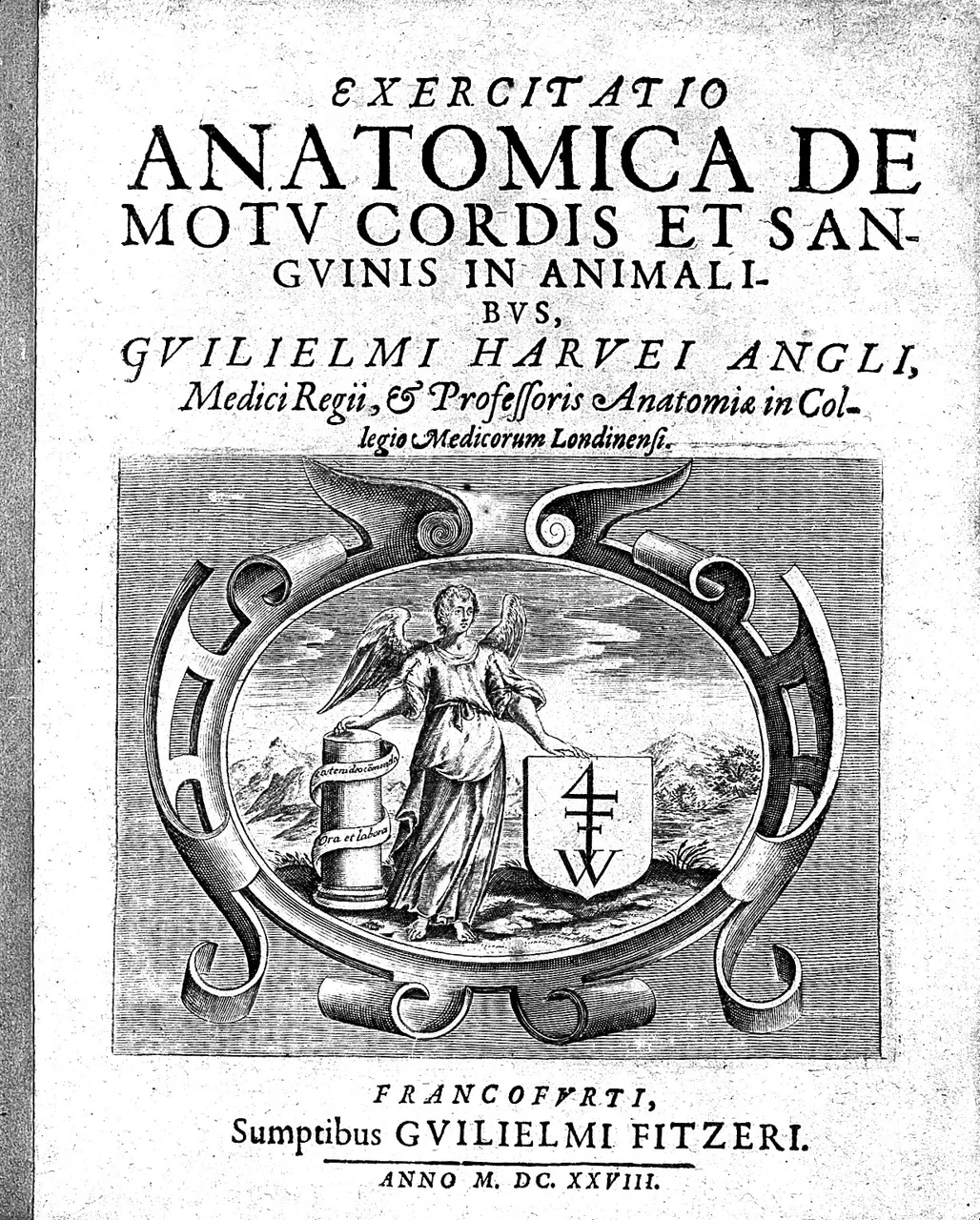 Title page of William Harvey's Exercitatio anatomica de motu cordis et sanguinis in animalibus, Frankfurt, 1628Wikimedia Commons, Wellcome Collection, CC BY 4.0 (Title page, Harvey, Exercitatio anatomica, 1628 Wellcome L0000182.jpg)
Harvey could not see how blood crossed from the smallest arteries to the smallest veins. He supposed that it soaked through pores in the flesh. Malpighi found the vessels between them in 1661, four years after Harvey died.
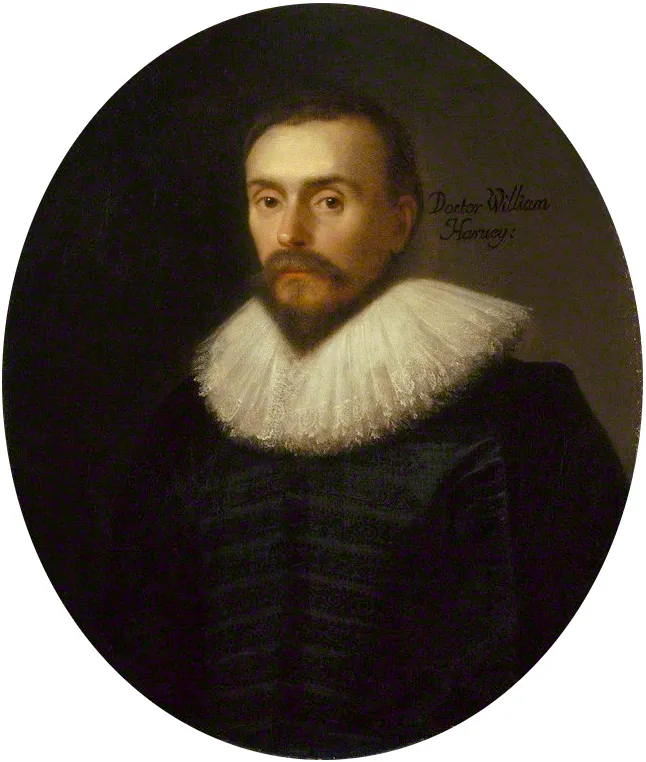 William Harvey, after a portrait by Daniël Mijtens, about 1627Wikimedia Commons, after Daniël Mijtens, Public domain (William Harvey 2.jpg)
Sources
- William Harvey, Exercitatio anatomica de motu cordis et sanguinis in animalibus (1628), ch. 9.
Prev: The bandaged armNext: Malpighi's capillaries