1822 to 1833
A window into the stomach
On 6 June 1822, on Mackinac Island in Lake Huron, a musket went off by accident less than a metre from Alexis St. Martin, a young canoe man of the American Fur Company. The shot tore through the left side of his lower chest and into his stomach. William Beaumont, the army surgeon at the fort, kept him alive.
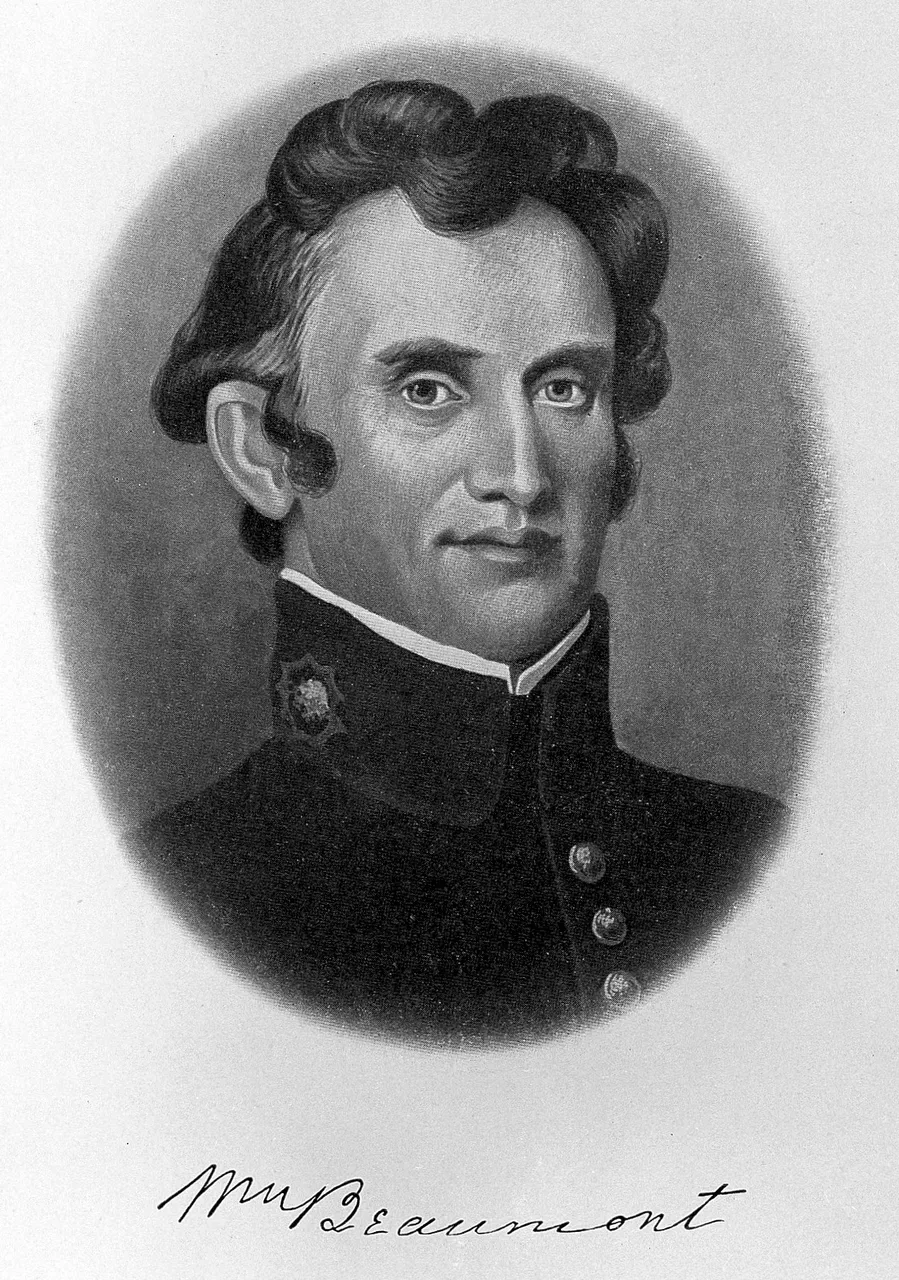 William BeaumontWikimedia Commons, Wellcome Collection, CC BY 4.0 (Portrait of William Beaumont. Wellcome L0011054.jpg)
The wound healed with an opening from the stomach to the skin, covered by a fold of lining that could be pushed aside. From 1825 to 1833 Beaumont used it to watch digestion. He lowered food into the stomach on silk threads and pulled it out at intervals to see how far it had dissolved.
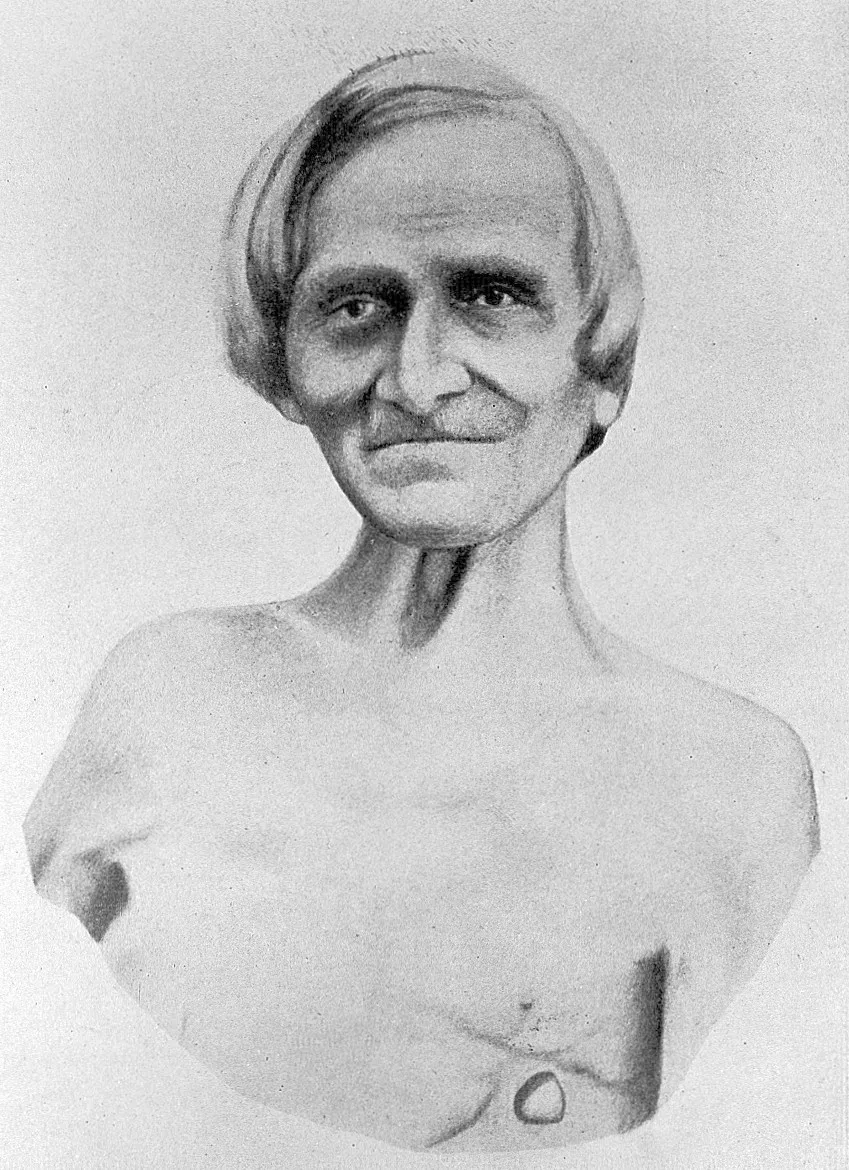 Alexis St. Martin in later life, with the healed opening into his stomach below his left breast, from Jesse Myer, Life and Letters of Dr. William Beaumont, 1912Wikimedia Commons, Jesse Shire Myer, Public domain (St Martin Alexis.jpg)
He drew off gastric juice and watched it digest meat in a vial kept warm outside the body, which showed that digestion is chemical work done by the juice. He published 238 experiments in 1833. St. Martin went back to Canada, raised a family and outlived Beaumont by 27 years.
Sources
- William Beaumont, Experiments and Observations on the Gastric Juice, and the Physiology of Digestion (Plattsburgh: F. P. Allen, 1833).
Prev: A meal's journeyNext: Pavlov's dogs