The glands that pour in
Glands outside the tube pour their juices into it through ducts. The salivary glands open into the mouth. The liver makes bile, which waits in the gallbladder until a meal arrives. The pancreas, behind the stomach, makes enzymes for every kind of food. Bile and pancreatic juice enter together at the start of the small intestine.
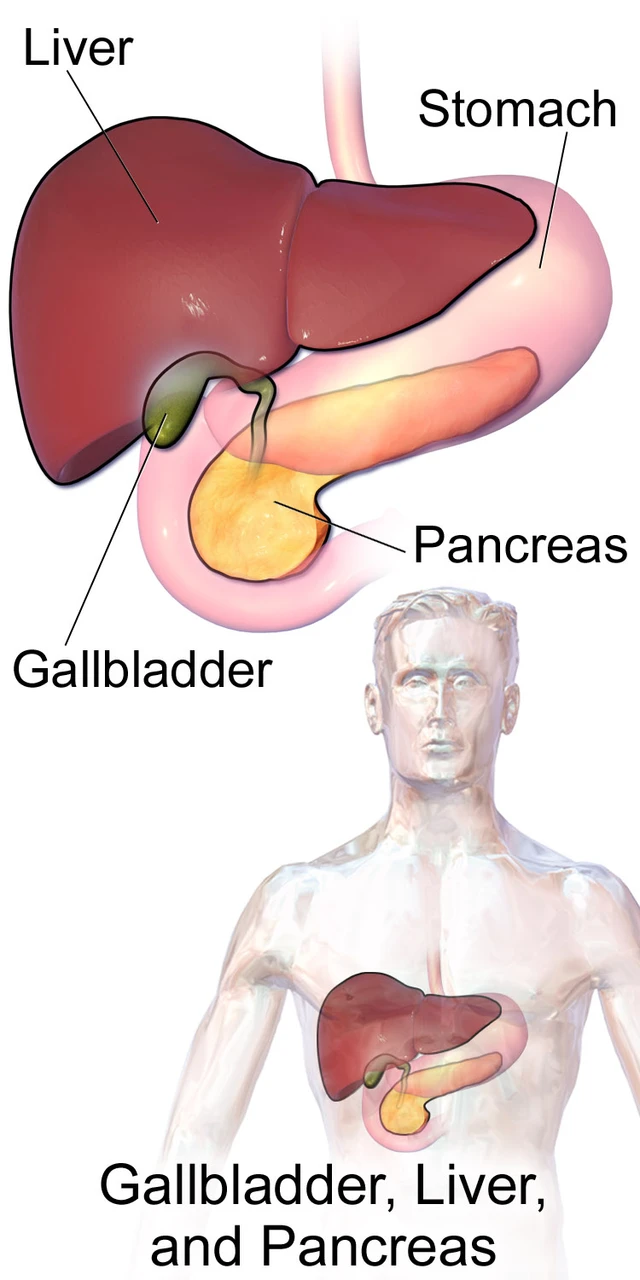 The liver, gallbladder and pancreas beside the stomach and duodenum, Blausen MedicalWikimedia Commons, BruceBlaus (Blausen Medical), CC BY 3.0 (Blausen 0428 Gallbladder-Liver-Pancreas Location.png)
Millions of small glands in the wall of the stomach and intestine add their own. Together the glands pour about seven litres a day into the tube, far more than a person drinks. Nearly all of it is taken back: of the eight or nine litres that pass each day, about a tenth of a litre leaves in the faeces.
Sources
- Arthur Guyton and John Hall, Textbook of Medical Physiology, 13th ed. (2016), ch. 65 and 66.
- Susan Standring (ed.), Gray's Anatomy, 42nd ed. (2020), chapters on the mouth, the liver and the pancreas.
Prev: From mouth to anusNext: Teeth