1653
Rudbeck and Bartholin
In Uppsala the young Swede Olof Rudbeck traced clear, watery vessels from the liver and from all over the body into the thoracic duct, and in 1652 he showed them to Queen Christina. In Copenhagen Thomas Bartholin found the same vessels and named them vasa lymphatica, water vessels, from the Latin lympha, clear water.
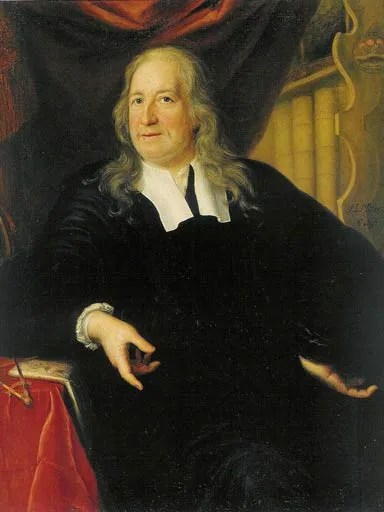 Olof Rudbeck in 1696, portrait by Martin Mijtens the elderWikimedia Commons, Martin Mijtens the elder, Public domain (Olaus Rudbeck Sr (portrait by Martin Mijtens Sr, 1696).jpg)
Both men published in 1653 and argued for years over who had been first. Bartholin added a mock funeral for the liver, which had lost the role Galen gave it as the maker of blood. Lymph and chyle, they had shown, reach the blood through the great veins of the neck.
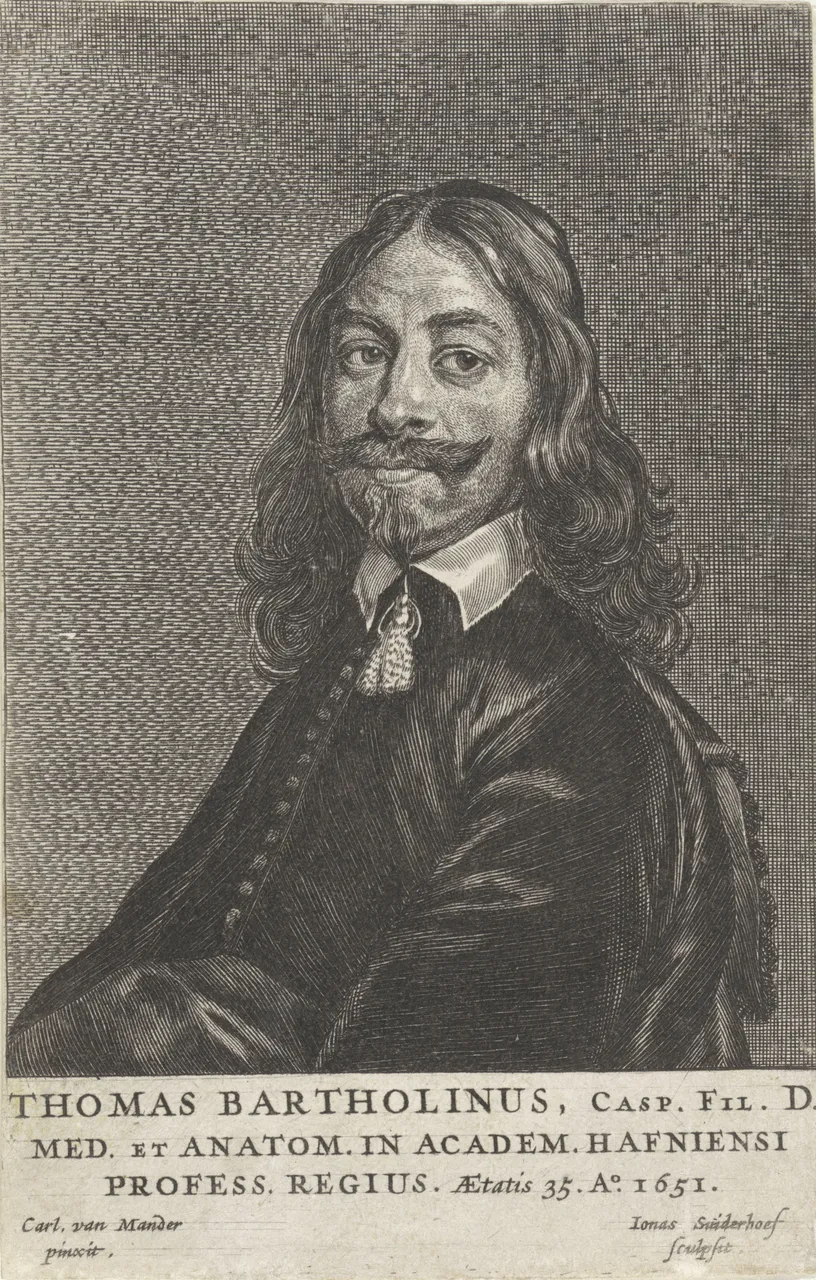 Thomas Bartholin at 35, professor of anatomy at Copenhagen, engraving by Jonas Suyderhoef after Carel van Mander, 1651Wikimedia Commons, Rijksmuseum, CC0 (Portret van Thomas Bartholinus, RP-P-OB-60.701.jpg)
Sources
- Olof Rudbeck, Nova exercitatio anatomica, exhibens ductus hepaticos aquosos et vasa glandularum serosa (Västerås, 1653).
- Thomas Bartholin, Vasa lymphatica, nuper Hafniae in animantibus inventa, et hepatis exsequiae (Copenhagen, 1653).
Prev: Pecquet's cistern