1895
Röntgen's rays
On 8 November 1895 in Würzburg, the physicist Wilhelm Conrad Röntgen saw a screen glow in his darkened laboratory while he passed a current through a glass tube wrapped in black card. Rays from the tube went through card, paper and wood. He called them X-rays, X for unknown.
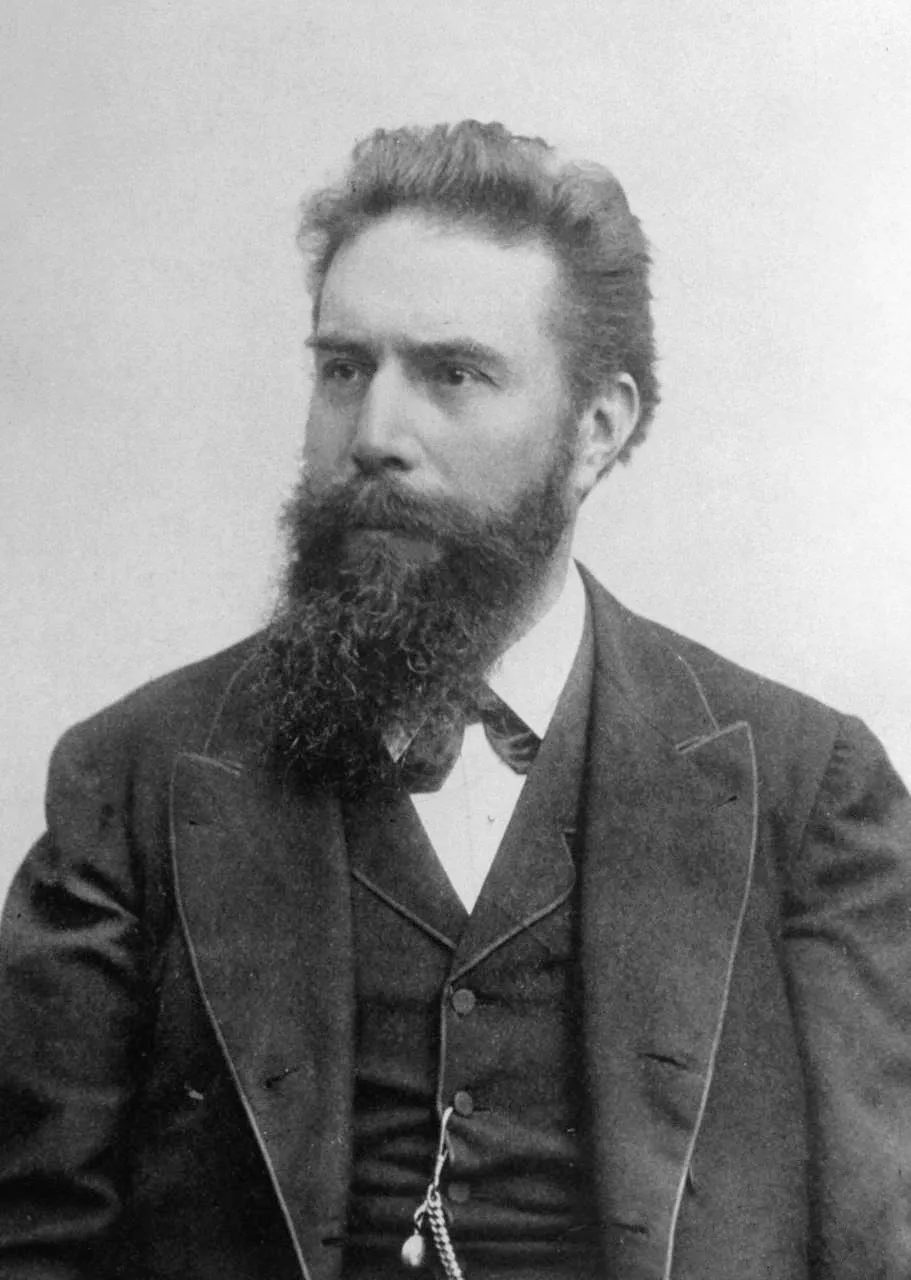 Wilhelm Conrad RöntgenWikimedia Commons, unknown photographer, Public domain (Roentgen2.jpg)
On 22 December he photographed the left hand of his wife, Anna Bertha, in an exposure of about 15 minutes. The bones and her ring showed clearly, the flesh only faintly. He sent his paper, On a new kind of rays, to the Würzburg Physical-Medical Society at the end of December, and the picture went round the world within weeks.
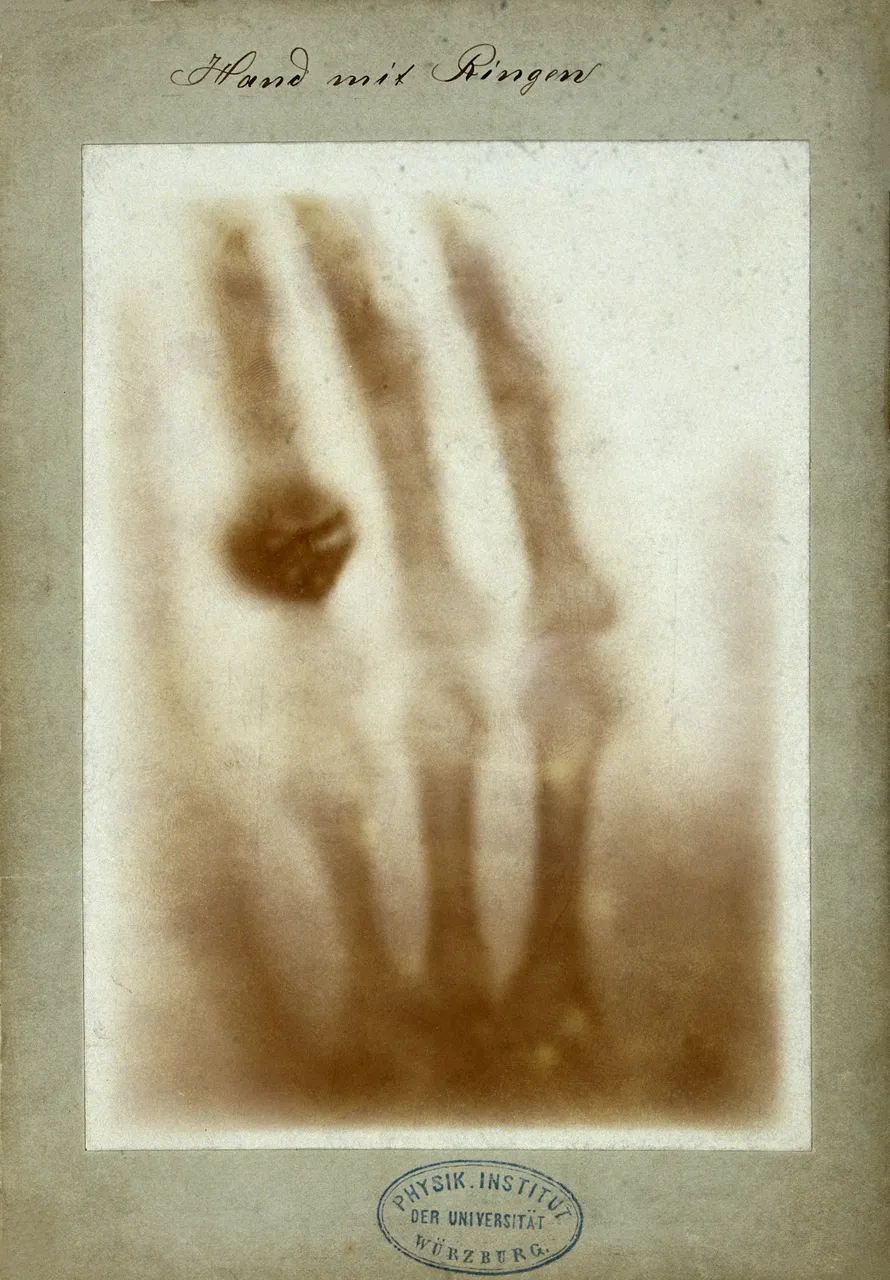 Röntgen's X-ray of his wife's left hand with her ring, 22 December 1895Wikimedia Commons, Wilhelm Röntgen, Public domain (First medical X-ray by Wilhelm Röntgen of his wife Anna Bertha Ludwig's hand - 18951222.jpg)
Bone shows because its calcium absorbs X-rays far more than soft tissue does. Within months doctors used the rays to find broken bones and bullets. In 1901 Röntgen received the first Nobel Prize in Physics.
Sources
- Wilhelm Conrad Röntgen, Über eine neue Art von Strahlen, Sitzungsberichte der Physikalisch-Medizinischen Gesellschaft zu Würzburg (1895): 132 to 141.
- Otto Glasser, Wilhelm Conrad Röntgen and the Early History of the Roentgen Rays (Springfield: Charles C. Thomas, 1934).
Prev: Vesalius and the Fabrica